FOSDEM 2026: wrap up
FOSDEM 2026: Open Source Design Devroom wrap up
Introduction
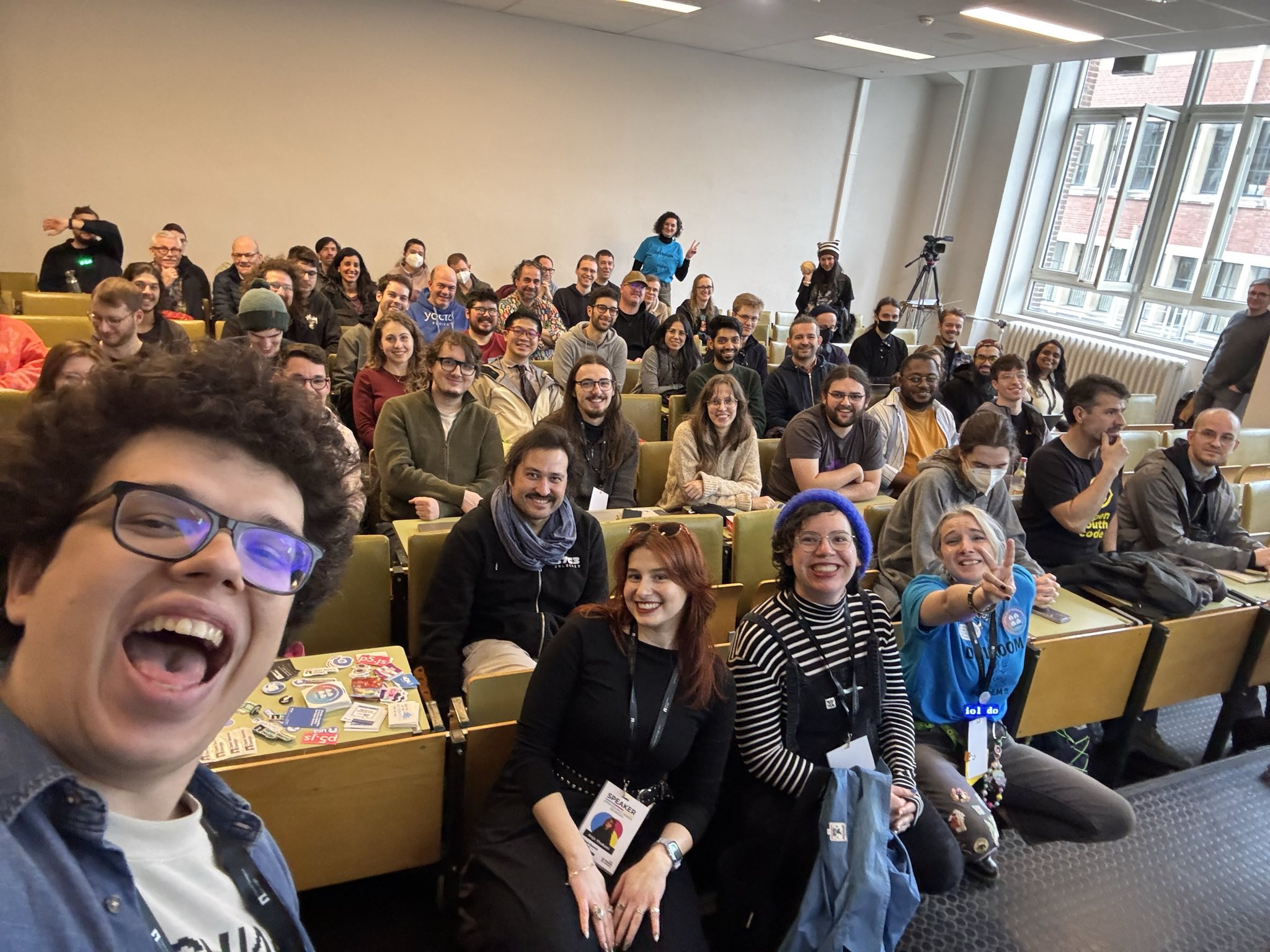
The 12th edition Open Source Design devroom in 2026 ran for a half a day on Sunday 1st of February from 13.00pm until the end of the conference at 17.00pm with 8 talks. Most talks had a good/full turn out of audience numbers in the room, even right up until the end of the day on Sunday, which is typically when many folks start travel home from Brussels.
Each talk followed the same format as years previously, 20 minutes each with 5 minutes for questions, and again, many talks could have been much longer and delved into the details and nuances of topic like security, privacy, supply chain safety, design systems and collaboration processes. In recent years we’ve applied for full days of a devroom which would either mean longer talks from some speakers or more speakers. This year we received over 30 talk proposals. Which have their speaker and OSS project information anonymised so that the core maintainer team can vote on the quality of the topic and mitigate bias towards familiar people and OSS projects. We only received a half day in 2026 which means shorter talks and less speakers but as the interest for open source design grows we’ll continue to apply for more time and attention to the varied and broad aspects of design in OSS.
All the talks were recorded and will be available on their individual pages on the FOSDEM website. https://fosdem.org/2026/schedule/track/design/ (this website will be archived once FOSDEM 2026’s website is live. When that happens please search for ‘FOSDEM 2026’ in a search engine and look for the archived site)
You can also find every design devroom from 2015 onwards by visiting the yearly specific website of FOSDEM e.g. https://archive.fosdem.org/2015/schedule/track/open_source_design/ https://archive.fosdem.org/2018/schedule/track/open_source_design/ etc.
In 2026 we did struggle to include talks with accessibility as a critical component as well and also endeavoured to platform and prioritise speakers from traditionally under-represented geographical locations but as FOSDEM is an free to attend conference, each devroom organiser, should they want to pay for speakers and volunteers would need to fundraise. This year we were able to use limited funds of $550 USD to pay for two speakers partial travel/accommodation costs. If you’d like to contribute to 2027’s travel funds for FOSDEM and/or other conference costs for open source design related events and conferences you can do so on our open collective funds page: https://opencollective.com/opensourcedesign
The Talks
Designing attestations UI: The Security and Safety of OSS package supply chain - Eriol Fox
The speaker worked on a 12+ week project looking at how to express in the varied UI’s of three package repositories (npm, pypi and RubyGems) we can now see more clearly what developers, across skill and knowledge levels, use in package repository pages to make a decision on the security of an OSS located on a registry. These decisions are critical for better understanding trust, value, social proof and the knowledge of secure practices across developers and helps answer the question: how much do developers know about the security of their software supply chain?
You can take a look at the project repository here: https://github.com/ossf/wg-securing-software-repos/tree/main/docs/attestations-style-guide
The UI Layer of Security: What could go wrong? - Elio Qoshi & Anja Xhakani
Watch this talk: https://fosdem.org/2026/schedule/event/YTN9QV-ui-layer-of-security/
The speakers took the audience on a journey into the rarely looked at the parts of technology systems from a security perspective that is the clicking the buttons and interpreting the warnings part. A surprising number of real-world security failures happen not because the code is flawed, but because the interface leaves too much room for dangerous misunderstandings. The speakers touch on what the common mistakes are when the people that build and configure technology assume that users are fully aware of risks and nuances involved in operating the technology. This knowledge/understanding gap can lead to critical user security risks.
The speakers draw on their work at Ura with security-critical and open source projects, this talk explores how the user experience itself can introduce or amplify security risks and why these issues often slip through traditional code-focused reviews.
Designing For Trust and Safety In the Age of Predatory Technology - Caroline Sinders
This speaker goes deep into what online safety looks like in the age of Grok, misinformation, doxxing, and technology company founders imposing their own views of safety, surveillance, and ethics on their platforms. The speaker is a former trust and safety employee of the Wikimedia Foundation, and an online gender based violence expert with over a decade of experience,. They cover new design patterns, best practices, and product tooling to help achieve safety, security and foster trust for all types of communities online, but especially marginalized and vulnerable ones.
Parts of the talk focuses on how open source design can be a part of the solution space for creating safety, and how transparency, security and privacy should be leveraged for safety online. The speaker finishes with actionable design insights, UX, UI, new types of product design, and design related policy that could be implemented all for safety.
Gephi Lite: We Built a Data Visualization Tool, But We Couldn’t Design It - Alexis Jacomy & Desaintjan Arthur
Watch this talk: https://fosdem.org/2026/schedule/event/UKTJ3V-gephi-lite-redesign/
The speakers talk about Gephi Lite which is a web-based open-source network visualization tool built by a three-person engineering team. After two years of development and a functional application the team had a nagging feeling that the user interface wasn’t working for users. After bringing in Arthur Desaintjan, a design intern the Gephi Lite team were able to address the needs for usable interface fro users. The speakers share how they approached design at a pivotal moment in Gephi Lite’s life—first by stepping back to clarify what Gephi Lite should really be, then by running user interviews that revealed just how far our assumptions were from reality.
Design Systems in Open Source - Andres Betts
Watch this talk: https://fosdem.org/2026/schedule/event/ANP9VX-design_systems_in_open_source/
The speaker takes us through how Design systems evolved their process and how UI graphics are made, full with automation and deep integration. They then contrast this industry view with their experiences of Open Source communities, who are often left out of these design system processes and practices given that OSS are for certain subset of OSS user groups. The speaker then speaks about how using PenPot, for KDE Plasma and how they saw an opportunity to build something unique to develop the Plasma desktop faster and with higher fidelity to user experience standards. The speaker takes us through the implementation at the KDE Plasma Desktop from graphics, colors, typography, graphical components to much more.
You Don’t Need to Be a Designer to Design: Fixing UX in Open Source - Archita Gorle
The speaker starts with speaking to how Open source thrives on contributions from developers, testers, and community builders, but how design often gets left behind, especially when there are fewer designer in the FOSS ecosystem than people who write code.
The good news: you don’t need a design degree do design. You might start with ‘I see the problem, but I’m not a designer’ and look for the methods to help, which the speaker then explains some simple, practical design methods to identify and solve UX issues in open source projects. This talk focuses on the simple steps anyone can try and how to ask the right questions, sketch ideas on paper, and try them out with friends or community members. No special skills or software needed: just curiosity and a willingness to make things easier for others.
Understanding developer needs - User research in Forgejo - Otto Richter
This speaker, who themselves started out on the code/software side of an OSS project and themselves began to engage with user research and UX work when they saw opportunities for improvement in the project they were affiliated with. This speaker helped the audience to understand your OSS users and how that understanding should be an important step of software development. In recent years, many end-user facing FLOSS communities integrated at least some aspects of design into their development. Unfortunately, most developer-centric projects still haven’t started to even think about it. This talk concludes two years of user research in Forgejo, a Git-backed software forge and collaboration platform. Forgejo can be self-hosted or used on a public instance like Codeberg.org to create software together, from sharing and reviewing code to tracking user problems, doing project management and doing design work.
Use eye tracking to figure out usability issues, the open source way - Dmitriy Kostiuk
The speaker dives into the usage of eye trackers to track usability issues in FLOSS. The speaker introduces different eye-tracker tools and process and shows detailed examples showing the different data and information that can be captured by using eye-tracking and what insight that offers to an FLOSS project. Like seeing whether a user looks at written content or quickly uses a search function on a documentation page.
Visualization of short-term and long-term eye tracking data series is explained with sample code for Graphviz and GNU Octave.
What the audience said…
Feedback this year was again, glowing and kind with attendees of talks valuing specifically the focus on critical topics in OSS like security and privacy and not just the highly valued aspects that are expected by designers in regards to the UX and usability, but the growing interest in cryptography and package security. The talks that also welcomed broad participation into design in OSS were highly rated as design can often seem like a practice that can only be done by the trained few, but Archita and Otto’s talks emphasised how design and user research can be invested in many ways but different folks in OSS to the benefit of OSS projects. The designers in the room were energised by the depth in the topics of design systems and eye tracking and after the talks there were many new to OSS designers looking for pathways into contribution to OSS.
if you’d like to send us a review or quote from your experience of the FOSDEM Open Source Design devroom please email us on core(at)opensourcedesign(dot)net - feedback, compliments and critique is how we keep our volunteer energy up year on year and we always hope to improve experiences of people at FOSDEM as best we can.
You can also email us if you’d like to be involved in the Open Source Design Devroom as a volunteer next year. We always need help with the following:
Applying for the FOSDEM devroom and stand in September/October every year Promoting the call for talks to people in the open source design space Helping up develop fundraising processes for travel stipends and raising funds to distribute to speakers and volunteers Communications and liaising with selected speakers ensuring they have their talks prepared and everything they need to attend FOSDEM in Brussels. Volunteering in the Devroom at FOSDEM in Brussels. Hosting the room, Introducing speakers, tech and audio support, ensuring the room is safe and space is monitored and cleanup. Preparing banners, posters and stickers for handing out to attendees.